AI for Inclusion: How Digital Tools Can Empower Every Learner
By Rui A. Baptista da Luz – Bund-fiB gUG
At Bund-fiB gUG, we believe that the true potential of artificial intelligence (AI) in education lies not in replacing teachers, but in creating bridges where barriers exist. Our work focuses on ensuring that every learner, regardless of language, background, or ability, has equal access to meaningful learning opportunities. Through our participation in the #EduAId project, we are exploring how AI can support inclusion in both formal and non-formal education.
Exploring the potential of AI for inclusive learning
Many of the learners we work with come from multilingual, migrant, or low-literacy backgrounds. These students often struggle with traditional educational tools that assume high language proficiency or prior digital skills. For this reason, we are particularly interested in how AI-based tools, like real-time translation, adaptive reading support, or voice recognition, could reduce learning barriers and make educational spaces more inclusive.
Our team has begun mapping examples of AI use that could be adapted to tutoring environments, such as:
- real-time subtitling during lessons,
- automatic translation of key vocabulary into students’ native languages, and
- AI-supported summarization of classroom materials.
Our aim is to test some of these tools in our tutoring programs in Berlin, Leipzig, Magdeburg, and Hannover, with a strong focus on data privacy, ethical use, and teacher empowerment.
Supporting educators through responsible AI use
We are equally aware that educators need support to navigate these tools safely and meaningfully. That’s why Bund-fiB gUG is eager to start our internal training sessions on digital readiness and AI literacy for teachers, trainers, and youth workers. The goal is to help them use AI critically and creatively, without compromising the relational and human aspects of learning.
Looking ahead: Human-centred innovation
For Bund-fiB gUG, inclusion is not an algorithm, it’s a mindset. We see AI as a tool that can listen, translate, and adapt, but always under the guidance of human empathy and professional judgment.
Through the #EduAId partnership, we are excited to contribute to a European exchange on ethical and inclusive AI in education, sharing experiences, learning from others, and helping shape a digital transformation that truly benefits every learner.
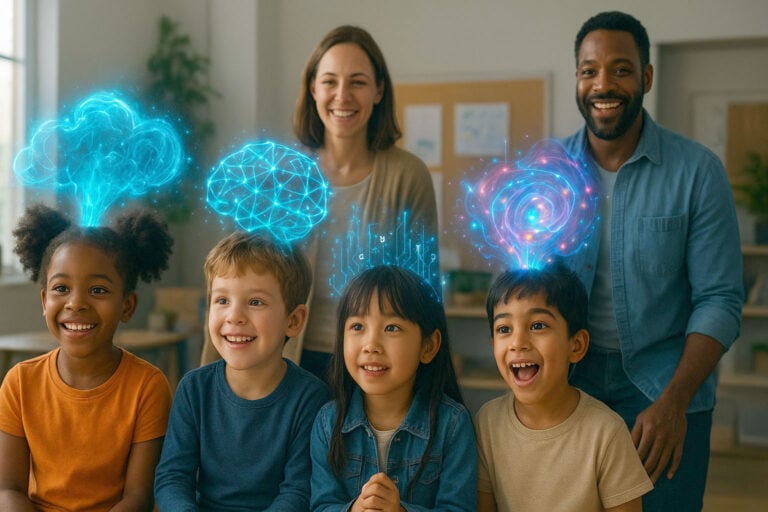
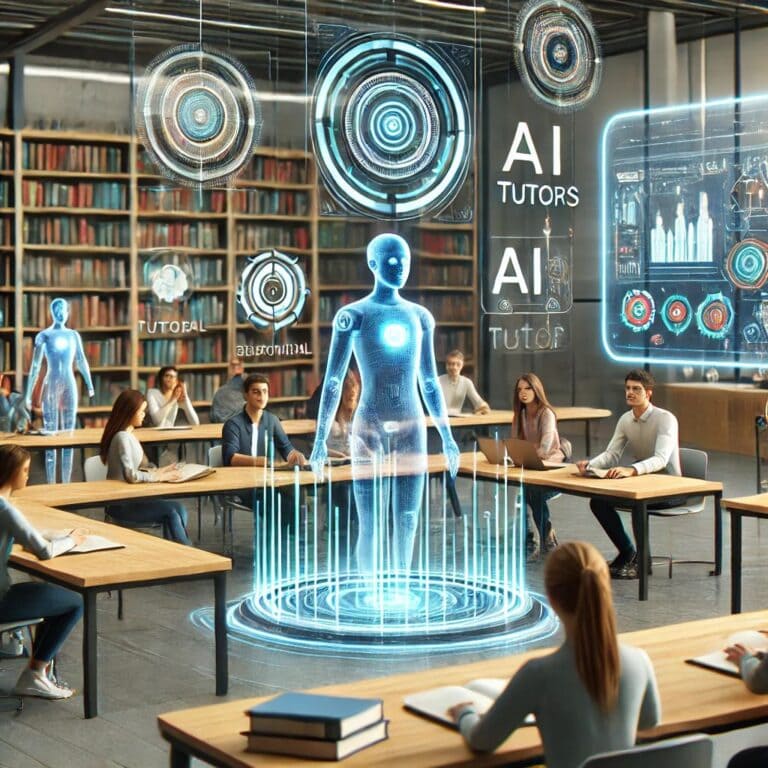
(Illustration generated using DALL·E (OpenAI’s image model) via ChatGPT.)