Discover the EduAId MOOC: Turn AI Challenges into Educational Opportunities
Artificial intelligence is already influencing how schools teach, learn, communicate and make decisions. The question is no longer…
Artificial intelligence is already influencing how schools teach, learn, communicate and make decisions. The question is no longer…
Artificial intelligence is no longer a distant promise; it is rapidly becoming part of everyday life in schools. In just a short period of time, tools capable of generating texts, images, lesson plans, personalised feedback and learning resources have found their way into classrooms across Europe.
Artificial intelligence has moved from theoretical discussion to daily reality in European schools, bringing with it a critical challenge that goes far beyond choosing the right software. According to the European School Heads Association (ESHA), representing 125,000 school leaders across 30 European countries, AI in education is fundamentally a leadership issue – not merely a technological one.
by Giovanni Zorra, BASQUE INTERNATIONAL RESEARCH ASSOCIATION Something significant happened in Strasbourg this spring — and every educator,…
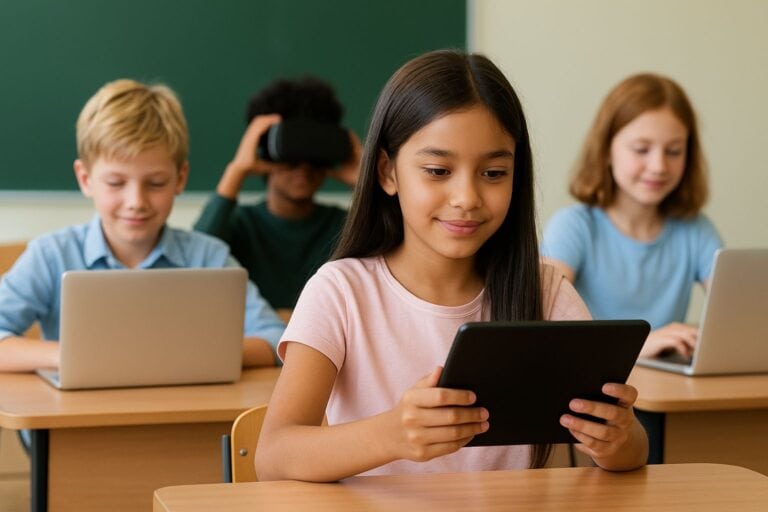
Artificial Intelligence (AI) is no longer a distant concept in education. Across classrooms, lecture halls, and vocational training centers, AI-driven tools are beginning to reshape how teachers teach, how students learn, and how institutions measure and recognize skills. Yet, the integration of AI into education remains complex, fragmented, and often uneven.
When people hear “artificial intelligence in schools”, they often think of faster grading or auto‑generated worksheets. I see something very different. At Oberschule Ofenerdiek, where I teach Art, Music, German and Biology and work as a counsellor, I experience every day how much more AI could do to help us truly understand and support our students.

As part of the current phase of the European EduAId project (Work Package 2), all project partners across Europe are conducting focus groups, anonymous surveys, and qualitative analyses to collect experiences, needs, and perspectives of students, teachers, and decision-makers regarding the use of artificial intelligence (AI) in education.
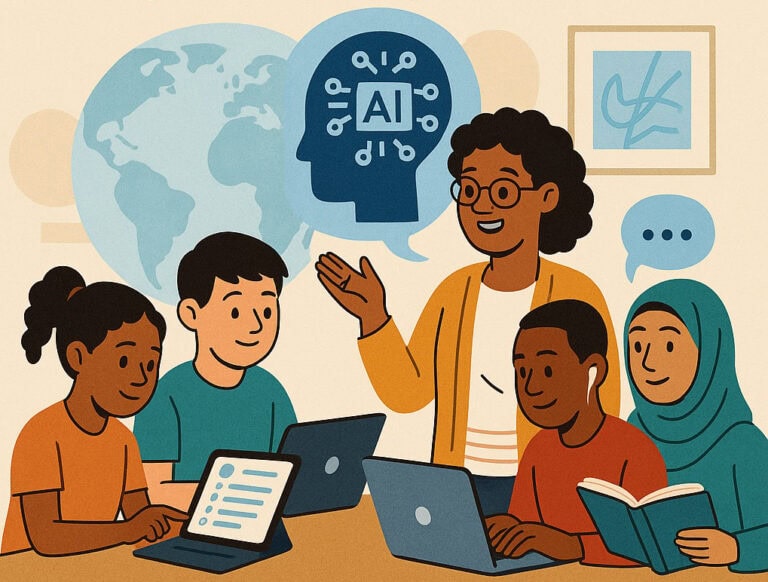
At Bund-fiB gUG, we believe that the true potential of artificial intelligence (AI) in education lies not in replacing teachers, but in creating bridges where barriers exist. Our work focuses on ensuring that every learner, regardless of language, background, or ability, has equal access to meaningful learning opportunities.

Inspired by the work of Sperling et al. (2025), this article focuses on raising AI-literate kids who can question, create, and innovate responsibly. AI is already part of kids’ lives. From YouTube recommendations to smart assistants, machines influence what they learn, watch, and even believe. The question isn’t if AI will shape their future, it’s whether they can shape AI. Understanding AI now is like learning to read in the digital age. Without it, kids risk being passive consumers of technology.
Artificial Intelligence (AI), a long-standing field of study, is experiencing a phase of extraordinary vitality. Increasing funding and continuous technological innovations are accelerating its spread through the creation of multiple tools.